



Form Your LLC Today!
CorpNet makes business filings simple! Our business filing experts will handle the LLC formation paperwork for you.
Starting July 1, 2026, Florida business owners will have a new choice for organizing multiple ventures. A Series LLC lets a single parent LLC create multiple “protected series,” each with its own assets, liabilities, and internal liability shield. It’s an alternative to forming multiple LLCs for each venture and reduces formation filings and registered agent costs when you have several distinct assets or business lines. But keep in mind that the liability protection only holds up if each series maintains separate books, bank accounts, and records.
For many owners, forming multiple traditional LLCs remains a simpler, more predictable path. However, creating a Series LLC may be advantageous depending on your situation. Considerations include how many ventures you run, how disciplined your recordkeeping is, and what your attorney and CPA advise for your situation.
What Changed in Florida on July 1, 2026?
Governor Ron DeSantis signed Senate Bill 316 into law on June 20, 2025, adding “Uniform Protected Series” provisions (Sections 605.2101–605.2802) to the Florida Revised Limited Liability Company Act.
The law took effect July 1, 2026, and it puts Florida in a small group of states alongside Delaware, Illinois, Nevada, Texas, and others that authorize the series structure. Florida based its version on the Uniform Protected Series Act (UPSA), which the Florida Bar’s drafting committee adapted to fit the state’s existing LLC framework. According to the Florida Department of State, both existing and newly formed Florida LLCs may designate protected series beginning on the effective date.
How a Series LLC and Multiple LLCs Differ
The Series LLC Structure
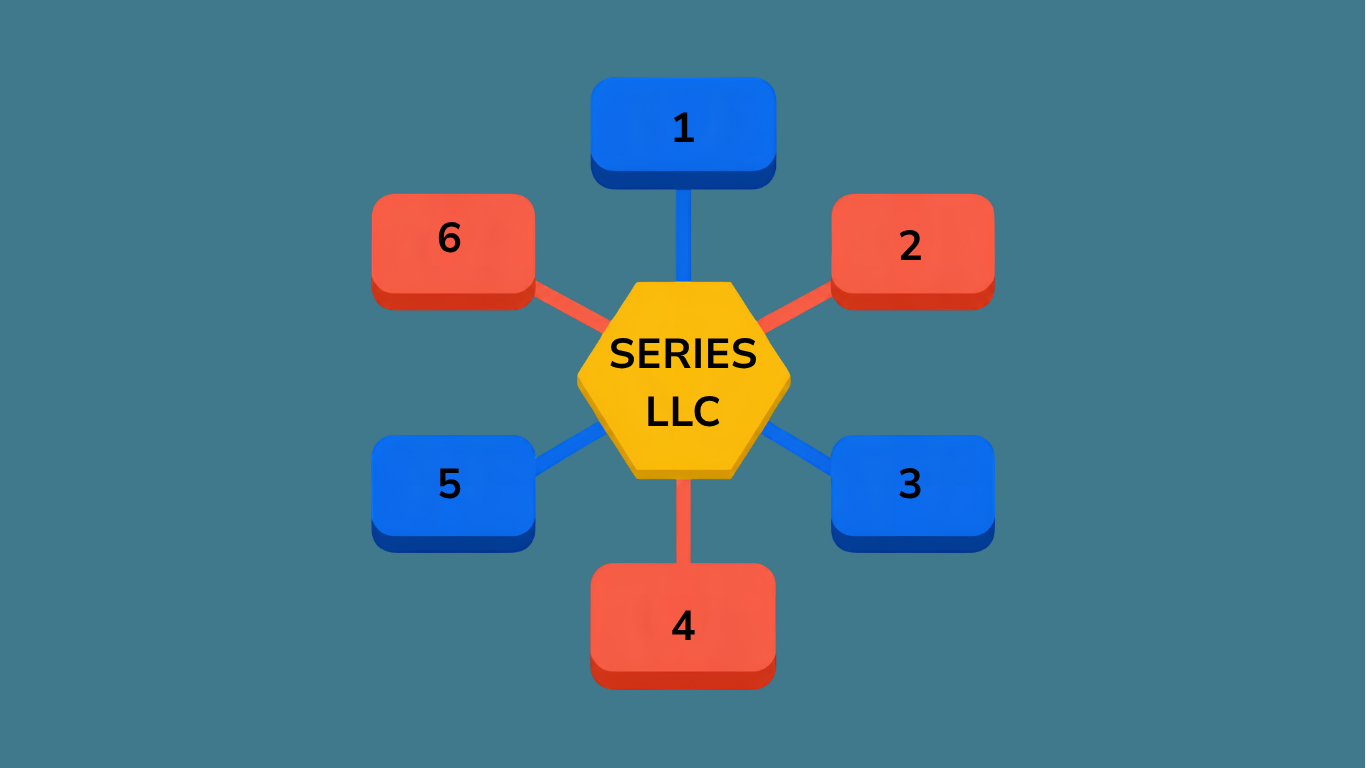
A Florida Series LLC starts as one “parent” (or “master”) LLC. That parent can then create one or more protected series inside it. Each series can hold its own property, sign its own contracts, have its own members and managers, and (when set up and maintained correctly) be shielded from the debts of the parent and every other series. A creditor of one series generally cannot access the assets of another. Significantly, a protected series is not a separate legal entity in Florida; it does not get its own record number or page on Sunbiz.org, the Florida Division of Corporations website. It exists as a legally distinct compartment inside the parent LLC.
The Multiple-LLC Structure
With multiple LLCs, you form a completely separate company for each venture, property, or business line. Each has its own Articles of Organization, its own annual report, its own registered agent, and its own standing with the state. The liability walls between them are well-established and backed by decades of case law. The trade-off is more paperwork and more recurring costs; you multiply every filing, fee, and compliance task by the number of entities you run.
Series LLC Vs. Multiple LLCs at a Glance
A Florida Series LLC may appeal to owners who want to:
- Separate several assets or business lines (for example, multiple rental properties) without forming a brand-new company for each one
- Reduce the number of formation filings and potentially consolidate some registered agent costs under one parent entity
- Add new series over time as the business grows, using a single designation filing per series
- Keep centralized governance while still segmenting risk internally
Multiple LLCs may be the better fit for owners who want to:
- Get the peace of mind of a liability shield with a long, well-tested track record in and out of Florida
- Keep each venture fully independent, which can make it easier to sell, add partners to, or dissolve it without affecting their other business ventures
- Avoid the strict, ongoing recordkeeping burden that the series shield requires
- Operate across multiple states, where series treatment may be inconsistent, untested, or unavailable
What Does It Cost to Set Up a Protected Series in Florida?
According to the Florida Department of State (Sunbiz), an existing, active Florida LLC can file a Designation of Protected Series online for $25 per protected series. Each series name must begin with the parent LLC’s full legal name and include “Protected Series,” “P.S.,” or “PS.” The parent LLC must also list each active protected series on its annual report filed with the state.
That $25 figure can be misleading, though. The filing itself is the cheapest part. The real investment is in designing the structure correctly, drafting an operating agreement that authorizes and governs each series, opening and maintaining separate bank accounts, and keeping meticulous records year after year. Florida attorneys have been quick to point out that a series shield can quietly erode through inattention. It’s wise for owners to consider professional setup and maintenance costs, not just the state fee, when comparing structures.
The Catch: The Liability Shield Is Not Automatic
This is the single most important thing to understand about the series structure. Florida’s law makes the liability protection conditional. Each series must maintain records that clearly identify its own assets and liabilities, separate from the parent and from every other series. Commingle funds, share bank accounts, or keep sloppy books, and a creditor may be able to “pierce” the shield and reach the assets of other series or the parent LLC itself.
Florida lawmakers built this requirement in deliberately. Because the state’s law is so new, there is no Florida case law yet interpreting it, and courts may look to older series states like Delaware and Illinois for guidance. Several attorneys have noted that multiple standalone LLCs, because each entity is fully separate, may actually be the safer choice for busy owners who cannot commit to disciplined, series-by-series recordkeeping.
Who Tends to Consider Each Option?
Real estate investors with multiple properties, entrepreneurs running distinct product lines, franchisees with several locations, and family investment groups are the profiles most often associated with the series structure. But “who it’s for” is not the same as “who should use it.” The right answer depends on your risk tolerance, recordkeeping habits, tax situation, and whether you operate in more than one state. That’s a decision for you and your licensed advisors, not a one-size-fits-all rule.
A Quick Note on Taxes
Tax treatment of series LLCs is nuanced and still evolving. The IRS has historically treated individual series as separate entities for federal income tax purposes in many situations, which can mean separate returns and separate obligations. States’ tax treatment can differ as well.
Because getting this wrong can be costly, I encourage speaking with a CPA or tax attorney to confirm how a Series LLC or a multiple LLC structure would actually be taxed under your specific circumstances.
Where CorpNet Fits In
Once you and your advisors have decided on a structure, CorpNet can handle the filing legwork. Whether you’re forming a Florida LLC, setting up multiple LLCs, adding a registered agent in Florida, or keeping up with annual report deadlines, our filing experts take care of the paperwork so you can focus on running your business. Not sure which structure to explore first? Our Business Structure Wizard can help you organize your thinking before you talk with a professional.
Disclaimer: This article is provided for general informational and educational purposes only and does not constitute legal, tax, or financial advice. CorpNet is a document filing service and is not a law firm or accounting firm. Florida’s Protected Series LLC law is new and untested in the courts, and requirements may change. Consult a licensed Florida attorney, a CPA, and the Florida Department of State before selecting or forming a business structure.
Ready to Form Your LLC?
CorpNet makes filing LLC formation fast and easy! Our business filing experts can take care of all the paperwork for you.
Frequently Asked Questions
Is a Series LLC legal in Florida?
Yes. Florida’s Protected Series LLC law took effect July 1, 2026. Beginning on that date, both existing and newly formed Florida LLCs can designate one or more protected series by filing a Designation of Protected Series with the Florida Department of State.
How much does it cost to add a protected series in Florida?
According to Sunbiz, the state filing fee is $25 per protected series, filed online. Keep in mind this covers only the state filing, not the cost of legal setup, operating agreement drafting, separate bank accounts, or ongoing recordkeeping.
Is a Series LLC cheaper than forming multiple LLCs?
It can reduce some upfront and recurring costs, since you’re filing series designations under one parent rather than forming separate companies. But the savings only make sense if you can maintain strict separate records for each series. For some owners, multiple LLCs end up being the more predictable option despite the extra filings.
What happens if I don't keep separate records for each series?
You’ll put the liability shield between series at risk. If you commingle assets or fail to maintain distinct books and accounts, a creditor may be able to reach the assets of other series or the parent LLC. A Florida attorney can help you set up recordkeeping systems that support the shield.
Should I choose a Series LLC or multiple LLCs?
There’s no universal answer. Things to consider include the number of ventures you run, your recordkeeping discipline, your tax situation, and whether you operate in multiple states. A licensed Florida attorney and a CPA can help you compare the options for your specific business.
Can I convert my existing Florida LLC into a Series LLC?
An existing, active Florida LLC becomes a Series LLC once it properly designates its first protected series and files the designation with the state on or after July 1, 2026. Your operating agreement generally needs to authorize the series, and your LLC members typically must consent. Confirm the specific requirements with your attorney.