


As I’ve worked with entrepreneurs over the years, I’ve found that a particular point of confusion centers around whether a Limited Liability Company (LLC) is incorporated. Those looking to start a business often are confused about what it means to be incorporated and the differences between an LLC and a Corporation, which is a type of business entity that is incorporated.
An LLC is not incorporated and it’s not the same thing as a Corporation. Having said that, however, there are similarities between LLCs and Corporations. You’ll read more about LLCs and Corporations and how they operate, but first let’s look at exactly what is incorporation.
What Is a Corporation?
Incorporation is a legal process that enables an individual or group of people to form a company that is a separate legal entity from its owner or owners. The type of business formed through that process is called a Corporation.
Because a Corporation is a separate legal entity from its owners, the personal assets of owners are protected, and they are shielded from responsibility for debt and legal liability in the event of lawsuits. That limited liability is usually considered a major advantage of this type of business entity.
Another advantage of a Corporation is that it can raise capital by issuing shares of its stock. There are no restrictions on the number of shares a Corporation can have. A downside to this type of business entity is that there are more requirements and red tape involved with getting a Corporation up and running than with other types of businesses.
Forming a Corporation
Incorporation requires a business to register with a state as a legal entity. That involves drafting Articles of Incorporation, which provide information about the business. The amount of information required varies from state to state, but Articles of Incorporation normally include the following:
- The primary purpose of the company
- The official name of the business
- The total number of shares the business will issue
- What type of shares, such as common or preferred, will be offered
- The name and address of the company’s registered agent
- The names and addresses of the owners of the company
- The names and addresses of board members, if already determined
- If the company is being established for a definite or indefinite amount of time
Owners of the company will also have to pay a registration fee and obtain any licenses or permits they need to operate legally. Once a company has satisfied the requirements for incorporation, it is recognized by the state as a Corporation and is subject to the benefits and responsibilities of that type of business entity.
How Corporations Are Taxed
A Corporation is known as a C Corporation unless it meets certain IRS requirements that allows it to operate as an S Corporation. An S Corporation is not a business entity in its own right, it’s simply a Corporation that has a special tax status with the IRS.
An S Corporation is taxed very differently from a C Corporation in that S Corporations are subject to a pass-through method of taxation, which means owners report income and losses on their personal tax returns and pay taxes based on their individual tax brackets.
C Corporations, on the other hand, must pay corporate taxes on earnings before any profits can be distributed to owners, who are called shareholders. Those shareholders must then pay personal income taxes on their income.
This system is known as double taxation and is often considered a downside of Corporations, although shareholders often can take advantage of certain tax advantages to reduce the impact. Corporations also have some notable write-off advantages that can reduce taxable income.
Corporation Management
The shareholders of a Corporation elect a board of directors that is responsible for managing the business and affairs of the company. The board usually appoints a manager to run the day-to-day operations. This separates owners and management and protects the business from disruption if one or more shareholders sell their stock and exit the company.
What Is an LLC?
Like a Corporation, an LLC is registered with the state and is its own legal entity, separate from its owner or owners. That means that, generally, owners are not personally liable for the actions of the company – only business assets would be at stake in the event of that the business is sued, or creditors are looking for repayment.
There is no limit to the number of owners – known as members – an LLC can have. A business with just one owner is called a single-member LLC, while one with more than one owner is called a multi-member LLC.
Forming an LLC
LLCs are fairly easy to set up and require relatively minimal work to keep in compliance. The state in which the business is based will require that you file paperwork and pay filing fees to get started. An important document for LLCs is its Articles of Organization, which are a public document providing relevant information about the business.
Similar to the Articles of Incorporation filed by a Corporation, Articles of Organization normally include the following information:
- The name of the LLC
- The purpose of the LLC
- The name and address of the registered agent
- How the LLC will be managed
- The mailing address of the business
- If the company plans to operate indefinitely or for a certain amount of time
- Names and signatures of all LLC members
To remain in compliance, an LLC must meet requirements such as filing annual reports, business license renewals, and paying franchise taxes, if applicable.
How LLCs Are Taxed
The owners of an LLC get to decide how the business is taxed. By default, an LLC is taxed as a pass-through entity – the same as an S Corporation, Sole Proprietorship or General Partnership. That means owners report income and expenses on their annual tax returns and pay taxes to the IRS based on their personal income rate. The same normally applies to state and local taxes.
While this is a simple way to pay taxes, LLC members are generally considered to be self-employed, meaning they must pay Social Security and Medicare taxes on their share of the profits. Known as self-employment taxes, the current rate is 15.3%.
LLC members can get around paying self-employment taxes, however, by having the business classified as a Corporation for tax purposes. This doesn’t mean the LLC has become a Corporation or is incorporated, it simply enables the LLC to be taxed the way a Corporation is taxed.
A word of caution, here. There are advantages and disadvantages to being taxed as either an LLC or a Corporation. If you’re ever in the position of having to decide how your business will be taxed, I’d strongly recommend that you consult a professional.
LLC Management
While the owner of a single-member LLC is automatically considered to be its manager, a multi-member LLC can choose to have members run the day-to-day operations of the business or hire a professional manager to run it for them.
Most LLCs choose to be member-managed, which gives members more control over how the business is run. If members don’t want to be involved in the daily business of the company or are unable to, however, hiring a manager can make sense.
Choosing Between an LLC and a Corporation
If you’re wondering whether you should structure your business as an LLC or incorporate it and operate as a Corporation, there are some key factors to consider:
- LLCs are generally easier to set up and manage than Corporations.
- LLC owners can decide whether they want the business to be taxed as a Sole Proprietorship or General Partnership or have it considered a Corporation for tax purposes.
- Members of an LLC that is taxed as a pass-through entity must pay self-employment taxes.
- Corporations, with the exception of S Corporations, are subject to double taxation.
- Corporations are able to have profits remain with the business and pay them out as dividends to shareholders.
- A Corporation also can issue shares of its stock to raise capital for expansion of the business.
- Both LLCs and Corporations offer liability protection for owners.
When deciding between an LLC and a Corporation, try to think long term and consider how large you envision growing your business, how much time you’re willing to put into making sure the business remains in compliance with all regulations, your preferences for how the business is taxed, and other issues that will affect how the company operates.
Take the time needed to understand the differences between a Corporation and an LLC, and the advantages and disadvantages that each type of business structure offers. And if you have questions or concerns when deciding what type of business is right for you, consult a professional for advice.
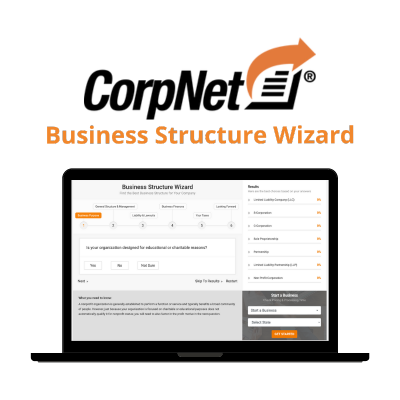
Choosing a business structure can be a tough decision for the new business owner. CorpNet wants to make the process easier.
This free, online tool helps small business owners navigate the process of picking the right business structure for their new business.